Content status
| Last checked | 2026-07-07 |
|---|---|
| Confidence | Moderate route framework; low for official map naming |
| Source type | Public footage, floating arena analysis, and battle-royale route practice |
| After launch | Yes: add route diagrams, bridge-risk ratings, official POI names, and screenshots. |
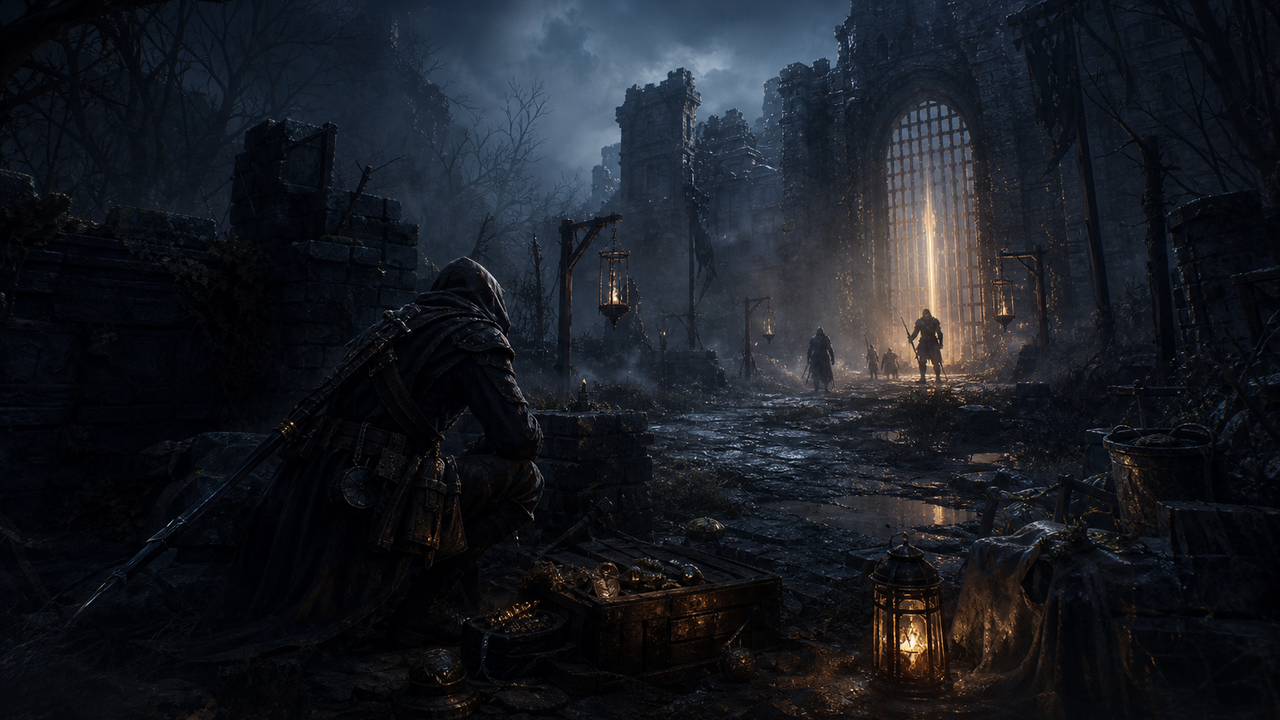
Fate Trigger's floating arenas should be read as a route puzzle. The most dangerous place is not always the place with the most enemies; it is the place with no exit after cooldowns are spent. Bridges, rooflines, central platforms, and cloudline flanks all reveal information to other squads.
Before crossing a bridge, ask three questions: who can see the crossing, what cooldown gets us out, and where do we reset if a second squad appears? If none of those answers is clear, the bridge is not a shortcut. It is a firing lane.
Central platforms usually offer better information and stronger loot pressure, but they also create sound, visibility, and multiple approach angles. New players should not loot central areas without naming an exit first. A squad that wins the first duel and stays exposed often loses to the team that waited.
Outer islands and lower-contest starts are not weak routes. They are learning routes. They let players test weapon ranges, movement timing, and ability use while avoiding instant third-party chaos. Once the squad understands exits, it can move toward higher-value fights.
Good route planning uses layers. The first layer is the immediate path: bridge, lift, rooftop, interior, or outer platform. The second layer is the escape path after contact. The third layer is the next safe island if a third party arrives. New players often see only the first layer and get trapped by the second.
A route is safer when it keeps the squad within trade distance. Wide looting splits can feel efficient, but they make revive cover and counterpush timing much worse. If teammates cannot shoot the same enemy within a few seconds, the route is probably too wide for early learning.
High ground should be judged by exit quality, not pride. Height is strong when it gives information, cover, and a descent route. It is weak when the zone forces a late drop or when every enemy can predict the only way down.
Late-zone rotations should start earlier than feels comfortable. By the time every team knows the same safe area, the obvious paths are watched. Saving one movement, control, or revive-safe tool for the final crossing is often more valuable than spending it on a low-value midgame poke.
After each match, mark the death by route failure type: exposed bridge, no exit, split squad, late rotation, bad high-ground hold, or overlong looting. This turns the map into a checklist rather than a blur of floating platforms.
After map names and official screenshots are public, this guide should add route diagrams, bridge-risk ratings, safe-start examples, and timestamped trailer references.
| Guide angle | Practical recommendation | Why it matters |
|---|---|---|
| Route priority | Identify exits before looting central platforms or challenging bridges. | Sky-island layouts make the escape path as important as the first angle. |
| Fight selection | Use high ground to reset bad fights, not only to start aggressive ones. | Vertical maps can turn a winning duel into a third-party collapse. |
| Map update | Add timestamped screenshots only when clearly credited and legally usable. | The site should analyze public footage without rehosting protected assets unnecessarily. |
Action checklist
- Never cross exposed bridges after cooldowns are spent.
- Hold exits before crafting or looting.
- Use height to leave fights, not just start them.
Search intent answer
Fate Trigger map searchers usually need a direct answer first, then a practical decision framework. For Fate Trigger, this page treats public footage, store data, and official-channel signals as planning material rather than final balance proof. Use the checklist and table below to decide what to test first, then revisit the page after launch updates or new patch notes.
Related database entries
Video evidence to review
Start with Official Trailer in the media hub and compare the visible UI, movement, combat pacing, and release-date cards against this guide. The embed is credited and loaded from YouTube.
Update checklist
- Replace cautious pre-launch language when an official patch note, class page, weapon page, or map page confirms the detail.
- Add timestamped video references only from embeddable public footage or credited source material.
- Keep rankings editorial and date-stamped so players can tell analysis from official balance information.